
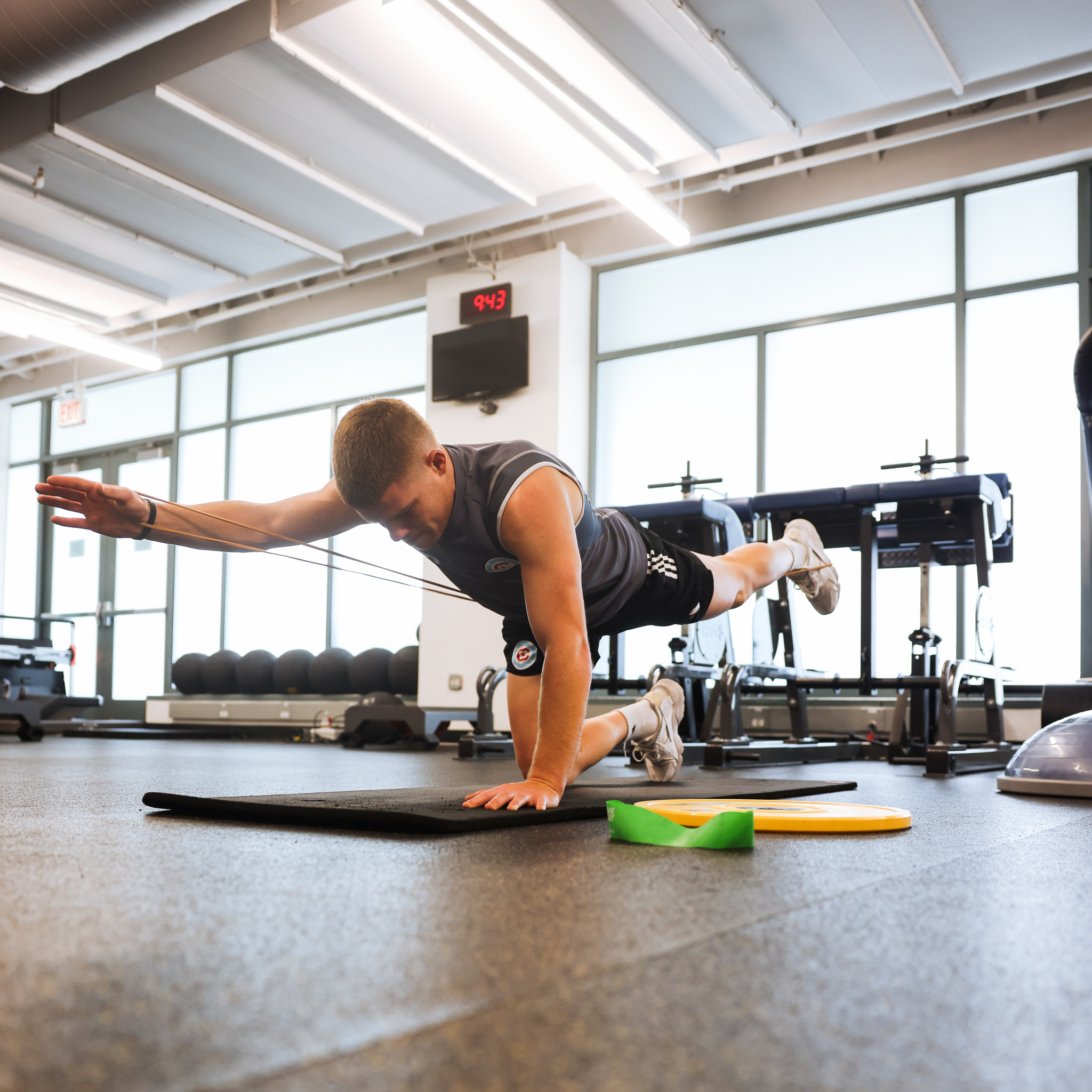


Soccer recovery was something I completely underestimated when I was a young player.
I thought the answer was always more.
More touches.
More running.
Another workout.
Another training session.
If I wasn’t improving fast enough, my instinct was pretty simple: work harder and get more time on the field.
I understand why young players think this way. Soccer rewards work. The players willing to stay after training, get extra touches and take their development seriously usually give themselves a better chance.
But there is another side of development that I did not understand nearly well enough when I was younger and I’m seeing the same pattern in young players today.
Your body has to be able to recover from the work you’re asking it to do.
I didn’t really understand that until I started spending more time in high-level soccer environments, particularly once I got to college and beyond.
Professional players absolutely work hard.
But eventually you realize something that your goals shift from having to to destroy yourself every day and work as hard as you possibly can to having the capacity to be able to perform again tomorrow and the next day, and the next day, and the next day…
And again on Saturday when the result actually counts.
That’s where soccer recovery starts becoming a competitive advantage.
And the only reason for that is because most young players are surprisingly bad at it and don’t think it matters. Which makes focus this dialed impossible to compete with. Because you’re automatically putting yourself into that top 1% threshold. And that’s where I had it terribly wrong.
I Thought Getting Better Meant Always Doing More
This is one of the biggest things I wish somebody had explained to me earlier.
Training creates stress.
That stress can be productive, obviously. Your body responds to it, rebuilds and adapts so that you can tolerate more difficult training conditions.
But you still have to give it the resources to do that.
If you’re practicing with your club four times this week, lifting twice, doing individual work three times, playing a game Saturday and sleeping six hours a night, adding another workout isn’t automatically discipline.
Sometimes it’s just bad planning.
That distinction matters.
I see ambitious players fall into this trap all the time because doing something feels productive.
Rest doesn’t.
Going to bed early isn’t going to make a good Instagram reel.
Eating a real meal after practice isn’t impressive.
Taking an easier day when your schedule has been brutal doesn’t feel like you’re getting ahead.
But some of the habits that matter most are boring.
Professional soccer taught me to respect boring.
How Players Can Stay Consistent When Motivation Drops
Motivation might convince you to work hard tonight. But a good development system tells you what your body actually needs tonight. Those are not always the same thing.
Recovery Is Training
Young players tend to separate the two.
Training is the serious part.
Recovery is the extra stuff.
But me myself… I would flip that.
If training is the stimulus, recovery is what allows your body to adapt to it.
That means your soccer recovery routine influences whether tomorrow’s session is productive, whether your legs feel heavy on game day and whether you can sustain a demanding week without constantly feeling beaten up.
And this becomes more important as the level rises.
Youth schedules can already be ridiculous.
Club training.
High-school soccer.
Individual sessions.
Strength work.
Showcases.
Tournaments.
Travel.
School.
Homework.
Then a player decides he needs another five-mile run because somebody on TikTok said professionals train twice a day. This is exactly where ambition without a system starts working against you. Because like I said, more isn’t automatically better.
The right work, properly recovered from, is.
The 6 Foundations of Soccer Recovery
There are endless recovery methods players can experiment with.
Most of them matter less than getting the fundamentals right.
If I were helping a younger player build his first real soccer recovery plan, I would start here.
1. Sleep Is Still the Best Recovery Tool You Have
If you want the least exciting recovery advice in this entire article, here it is:
Go to bed.
Seriously.
Young players will spend money on massage guns, supplements, recovery boots and every new product somebody promotes online while consistently sleeping five or six hours.
That makes very little sense.
Sleep plays an enormous role in adolescent health and performance, and chronic insufficient sleep is common in teenagers. The American Academy of Pediatrics has repeatedly highlighted the consequences of inadequate adolescent sleep… And soccer gives you plenty of reasons to sabotage it.
Late practices.
Dinner afterward.
Homework.
Shower.
Phone.
You look up and it’s midnight.
Then your alarm goes off at 6:15.
Do that once and you’ll survive.
Build your entire week around it and eventually something usually gives.
Your energy.
Your mood.
Your training quality.
Your ability to concentrate.
Your body.
The exact sleep needs of an individual athlete can vary, but the larger point is simple:
Stop treating sleep like whatever time is left after you’ve finished everything else.
Build backward from when you need to wake up.
That sounds basic because it is.
Basic doesn’t mean unimportant.
BTB NOTE: Inside the Locker Room and Path 2 Pro, we go much deeper into how players can structure their week around training, recovery and performance instead of trying to cram everything into every day.
What Serious Players Do Differently in the Offseason
2. Replace What Training Took Out of You
A hard soccer session doesn’t just make your legs tired.
You’ve burned energy.
You’ve sweated.
You’ve stressed muscle tissue.
Now your body needs resources.
This is where soccer nutrition and recovery connect.
Carbohydrates are an important fuel source for young athletes, while adequate protein supports growth and recovery. The American College of Sports Medicine’s youth-athlete nutrition guidance also emphasizes adequate total energy intake and appropriate timing of food around exercise.
I’m intentionally not going to give every player one magical post-training meal because there isn’t one. And youth athletes should not be building restrictive diets off something they read on a soccer blog.
But here is the principle:
After demanding training or a game, your body needs food.
Not three hours later because you forgot.
Not an energy drink.
Actual food.
Your recovery meal will usually include some combination of:
- carbohydrates to help replace the energy you’ve used
- protein as part of muscle repair and growth
- fluids to replace what you’ve lost
- enough overall calories to support training and normal growth
For younger players especially, this matters.
You aren’t just fueling soccer.
You’re fueling a growing human being who also happens to play soccer.
That’s why I hate seeing players become afraid of food because they think being serious means eating as little as possible or trying some professional athlete’s extremely specific diet.
Fueling well isn’t about eating perfectly.
It is about giving your body what it needs to perform and recover.
Inside the BTB Locker Room, we have an entire Fuel Like a Pro section because this subject deserves far more than a paragraph.
3. Hydration Starts Before Practice Ends
You shouldn’t finish training completely dehydrated and then expect one bottle of water on the ride home to fix everything.
Hydration is another basic that players make unnecessarily complicated.
The AAP recommends water as the primary hydration choice for most youth exercise, while longer or particularly demanding sessions can create situations where carbohydrate/electrolyte-containing drinks may be useful.
Conditions matter too. A ninety-minute session in moderate weather is different from two tournament games in August.
Players also sweat differently and lose different levels of sodium throughout their sessions. Believe me I’ve worn enough sweat patches in games and in pre-season to be able to say to this….
So stop looking for one universal number you saw on Instagram.
The best habit here is awareness.
Start practice hydrated. Drink throughout the session when appropriate. Rehydrate afterward.
Pay more attention during heat, tournaments and high-volume training periods.
And if you’re regularly finishing sessions with headaches, dizziness, extreme fatigue or other concerning symptoms, that is not something to simply “push through.” Tell a parent, athletic trainer or medical professional.
Serious players learn to distinguish discomfort from warning signs.
4. Learn the Difference Between Recovery and Doing Nothing
A recovery day doesn’t necessarily mean lying on the couch for twelve hours.
Sometimes complete rest is appropriate.
Other times, easy movement feels better.
A walk.
Light mobility.
An easy spin.
Gentle technical touches.
Something that gets you moving without adding another meaningful training load.
This concept became much clearer to me as I got older.
There is a huge difference between:
“I’m being lazy today.”
and
“Today has a different purpose.”
That second one is harder for ambitious athletes.
Because players love measurable effort.
Five miles feels measurable.
One hundred shots feels measurable.
Forty-five minutes of extra training feels measurable.
Recovery requires enough maturity to understand that the absence of exhaustion doesn’t mean the absence of progress. Know the difference.
5. Stop Treating Every Day Like a Maximum-Effort Day
This might be the biggest mistake in youth player development right now.
A player has:
Monday: team training
Tuesday: team training
Wednesday: private trainer
Thursday: team training
Friday: individual workout
Saturday: game
Sunday: tournament game or training
And somewhere in there he wants to lift three times.
When exactly is his body supposed to catch up?
This is why we teach systems so much at BTB.
Looking at one workout in isolation tells you almost nothing.
The question is:
Where does this workout fit inside the entire week?
A hard technical session can be great.
Strength training can be great.
Speed work can be great.
Extra finishing can be great.
The mistake is assuming that because five things are individually useful, doing all five at maximum intensity every week must be five times better.
It isn’t.
This is one reason we built age-specific training plans and recovery education into the BTB ecosystem. Players need to understand how the pieces fit together instead of collecting random workouts.
How Soccer Players Stay Focused When the Noise Gets Loud
6. Pay Attention to What Your Body Is Telling You
Young athletes are sometimes taught that toughness means ignoring everything.
Pain?
Keep going.
Heavy legs?
Work harder.
Exhausted?
Must not want it badly enough.
I don’t agree with that (more often than not).
Competing requires toughness.
There are days professional players train sore. There are games where you’re tired, and there are moments where you have to push through discomfort.
But toughness without judgment becomes stupidity pretty quickly.
Persistent or worsening pain deserves attention.
Overuse injuries in young athletes can develop gradually, and the American Academy of Pediatrics specifically recommends adequate recovery, healthy sleep and breaks within training schedules as part of reducing overuse risk.
You should learn your normal.
What does normal soreness feel like after a game?
How do your legs usually feel two days later?
What does genuine fatigue feel like?
What feels different?
You don’t need to become paranoid about every ache.
You do need to stop believing that ignoring your body proves how badly you want your goal.
Sometimes the professional decision is to speak up.
What About Ice Baths, Foam Rolling and Recovery Boots?
Now we can talk about the fun stuff.
Ice baths.
Foam rollers.
Massage guns.
Compression boots.
Saunas.
Cold showers.
Mobility tools.
Professional locker rooms have plenty of them.
And I’m not saying they’re useless.
Some players like certain recovery tools. Certain modalities may have a place depending on the athlete, timing, goals and medical guidance.
But young players often get the hierarchy backward.
If you are:
sleeping six hours, barely eating after training, chronically dehydrated, training hard seven days a week, and then sitting in recovery boots for thirty minutes…
the boots aren’t your biggest problem.
You cannot gadget your way out of bad fundamentals.
I wish young players understood this earlier because the soccer industry loves selling visible solutions.
A new recovery product feels like you’re doing something.
Going to bed at 9:45 isn’t nearly as exciting.
The boring thing still wins a lot.
Inside our Recovery Library in the BTB Locker Room, we can get much more specific about exercises, mobility, recovery routines and when different approaches make sense.
But earn the right to worry about the details.
Get the fundamentals right first.
How to Recover After a Soccer Game
A lot of players finish the final whistle and mentally move on.
Your next performance has already started.
You do not need a forty-step post soccer recovery routine.
Start simple.
Right after the game
Begin replacing fluids.
Eat when you reasonably can.
If you’re stiff after sitting in the car, some light movement later may feel better than staying completely sedentary.
That evening
Eat a legitimate meal.
Rehydrate.
Do whatever light recovery work is normal for you.
And prioritize sleep.
Not a midnight FIFA session because tomorrow is technically Sunday.
The next morning
Assess yourself.
How did you sleep?
What feels sore?
What is your next training demand?
That determines what today should look like.
This is where blindly following the same routine every Sunday doesn’t make much sense.
If you played fifteen minutes, your needs may differ from the teammate who played ninety.
If you have another game twenty-four hours later, the equation changes again.
Recovery has context.
How to Recover Between Soccer Tournament Games
Tournament weekends are where youth soccer recovery gets exposed.
Two games.
Sometimes three.
Hot weather.
Hotel sleep.
Restaurant food.
Long drives.
Players wandering around a complex for six hours between matches.
Then everyone wonders why the second game looks terrible.
You don’t need to live like a monk between games.
But you should think ahead.
Have food available that you know sits well.
Have fluids.
Get out of the sun when you can.
Don’t spend the entire break running around with teammates.
Pay attention to how much time you actually have before the next warm-up.
And don’t experiment with a completely new meal because somebody’s dad found a barbecue restaurant next to the tournament complex.
I have learned that lesson in various forms throughout my career.
Game day is a bad time for surprises.
This is also why preparation happens before the weekend.
If you wait until you’re exhausted and starving to make good decisions, you’ve already made the process harder than it needed to be.
The Recovery Mistakes I See Young Players Make
There are a few patterns I would correct immediately.
They add workouts without subtracting anything.
More training volume gets added onto an already full schedule because nobody looks at the week as a whole.
They stay up late and think sleeping in once will fix it.
One long Sunday morning doesn’t erase an entire week of bad sleep habits.
They treat soreness like proof of a good workout.
Being destroyed isn’t the goal.
Improvement is.
They copy professional recovery routines without professional context.
You saw a Champions League player get into a cold tub.
You didn’t see the sports scientist monitoring his training load, the chef preparing his food, the physio treating him or the fact that his entire day is structured around football.
Your life is different.
They wait until something hurts to care about recovery.
Recovery shouldn’t suddenly matter once you’re injured.
The whole point is building habits before something forces you to.
They confuse “serious” with “always doing more.”
This one is probably the most dangerous because it gets praised.
Everyone loves the kid who works constantly.
Almost nobody asks whether the work makes sense.
A Simple Soccer Recovery Checklist
If you’re a young player and your recovery currently has zero structure, don’t build some insane twelve-step protocol tonight.
Start here.
After a demanding training session or game:
1. Rehydrate.
2. Eat. Get carbohydrates, protein and enough overall food into your day.
3. Move if appropriate. Light mobility or easy activity can be part of your routine.
4. Look at tomorrow. Do you have another game? Training? A rest day?
5. Get to bed.
Then repeat it consistently.
That’s a better starting point than owning $2,000 worth of recovery equipment and having no routine.
You Need a Recovery System, Not More Random Tips
This is ultimately what changed my thinking.
Training.
Fueling.
Sleep.
Recovery.
Strength.
Preparation.
Mindset.
None of them exist independently.
They affect each other.
And young players are usually expected to figure all of that out on their own while also going to school and playing for a club.
That never made much sense to me.
Team training teaches the team.
It cannot possibly teach every player everything he needs to know about managing his development away from practice.
That gap is a huge reason we built BTB.
Inside the BTB Locker Room, we go deeper into things like:
- Recovery Library
- Prevention & Activation Library
- Fuel Like a Pro
- age-specific training plans
- how to structure the days you’re not playing
- habit formation
- performance and mindset
- tactical education
- recruiting
- the off-field systems that serious players are rarely formally taught
And if you want a more structured path instead of consuming lessons individually, Path 2 Pro organizes those pieces into a step-by-step development system.
I don’t want players leaving this article thinking they need twenty new recovery tricks.
Start with one.
Tonight, look at what time you have to wake up tomorrow.
Then decide what time you need to put the phone down.
That is recovery too.
Soccer Recovery FAQ
How long should a soccer player recover after a game?
There isn’t one recovery period that applies to every player. Match minutes, age, training history, soreness, travel, upcoming sessions and individual circumstances all matter. A player who played twenty minutes and has no game for a week is in a different situation than someone who played ninety minutes and competes again forty-eight hours later.
Rather than chasing one exact number, manage the workload around the athlete.
Prepare for your games like a pro with the BTB Pre-Game 90 Protocol
What is the best recovery for soccer players?
Start with the fundamentals: adequate sleep, nutrition, hydration, sensible training load and appropriate rest or low-intensity recovery.
Recovery tools can be additions.
They should not replace the fundamentals.
What should soccer players eat after a game?
A post-game meal should generally help replace energy and support recovery with carbohydrates, protein, fluids and adequate overall nutrition. Youth athletes also have growth and development needs, so highly restrictive diets should not be treated as a performance strategy. ACSM and AAP resources are useful starting points for families wanting evidence-based youth sports nutrition guidance.
Players with specific dietary, medical or performance needs should work with an appropriate qualified health professional, such as a sports dietitian.
Should soccer players take a day off?
Rest and lower-load periods can be an important part of a sustainable training schedule, especially for young athletes accumulating substantial soccer and additional training volume. AAP youth-sport guidance includes taking breaks as one strategy for reducing overuse problems.
The right schedule depends on the player and their total workload.
Is stretching good for soccer recovery?
Mobility or stretching may be included in a player’s recovery routine, but stretching alone does not compensate for poor sleep, inadequate food or excessive training load.
This is another place where players tend to obsess over the smallest piece of the puzzle.
How do professional soccer players recover?
Professional environments may use combinations of nutrition, hydration, sleep, load management, mobility, treatment, active recovery and different recovery modalities depending on the athlete and schedule.
The bigger lesson isn’t to copy every tool professionals use.
It’s to copy the intentionality.
Professionals don’t accidentally recover.
It’s built into the week.



Comments +
Comments