


LISTEN ON SPOTIFY | LISTEN ON APPLE | WATCH ON YOUTUBE
When I was coming through the professional ranks, there were certain names in American soccer that everybody knew. Lyle Yorks was one of them.
He had a reputation as one of the best agents in the game, particularly when it came to helping American players make the move to Europe. He’d represented players like Clint Dempsey, Carlos Bocanegra, and Jozy Altidore, and had been involved in some of the biggest transfers in American soccer history.
After I broke into the U.S. Men’s National Team, I eventually had the opportunity to work with Lyle myself. It was something I considered a privilege because I knew the caliber of people he’d worked with and the kind of career decisions he’d helped them navigate.
What I’ve always appreciated about Lyle is that he’s straightforward. He understands that a player’s career involves a lot more than getting the biggest contract or signing with the most recognizable club.
In this episode of the BTB Podcast, I wanted to pull back the curtain on the business of professional soccer. We talked about how agents actually operate, what happens behind major transfers, and why the decisions young players make at 16 or 17 can have such a significant impact on their development.
For young players dreaming of professional soccer, and parents trying to understand the opportunities being presented to their children, Lyle offers a perspective that very few people have access to.
In this conversation, you’ll hear:
- How Lyle went from having zero clients to representing some of the biggest names in American soccer.
- What really happened in the final seconds of Clint Dempsey’s transfer from Fulham to Tottenham.
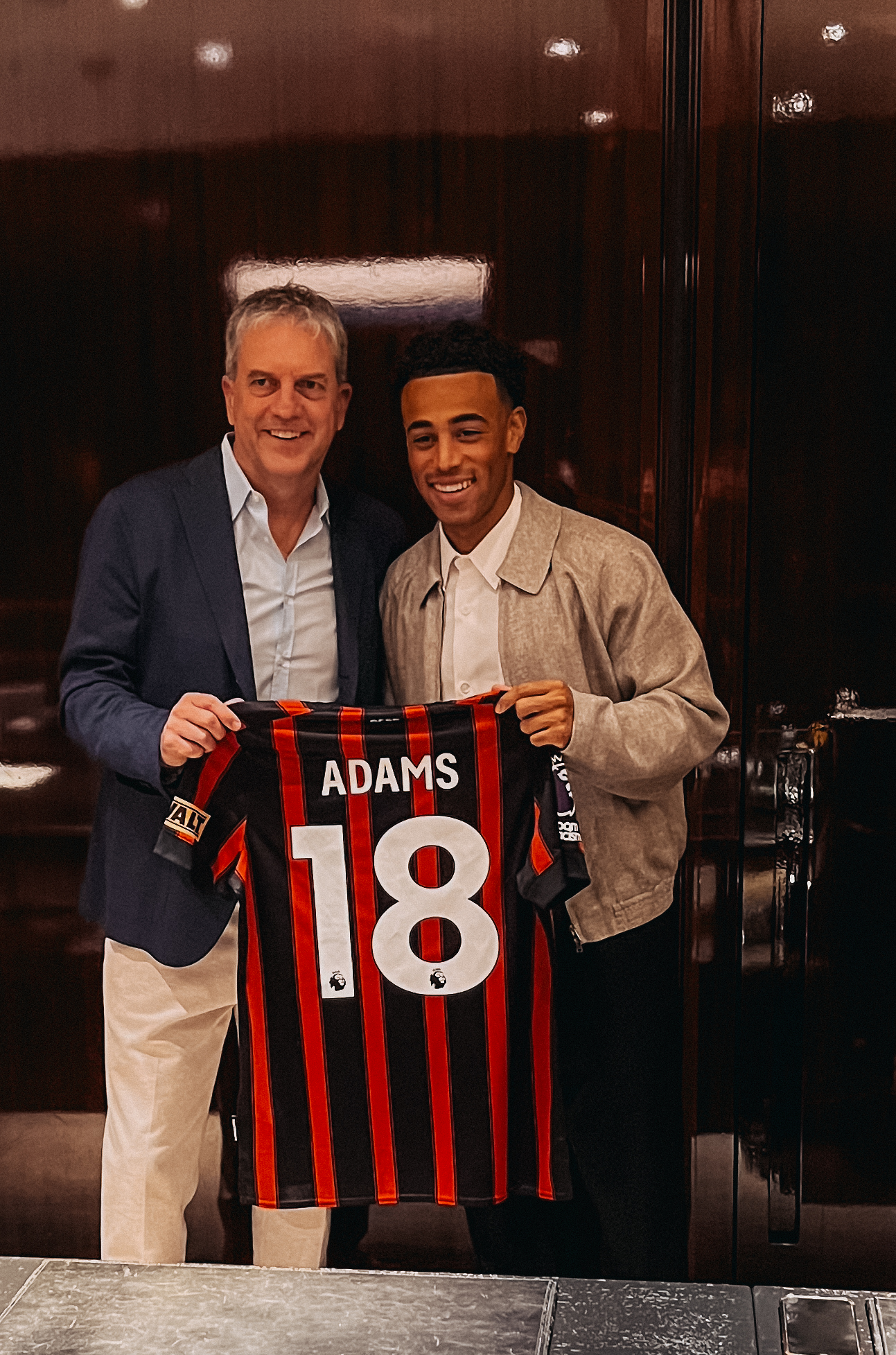
- The surprising story of how a professional player’s phone call helped confirm what Lyle saw in a 15-year-old Tyler Adams.
- Why getting an offer from a Premier League club doesn’t necessarily mean you should take it.
- How to evaluate European trials, professional contracts, and agents who promise young players opportunities abroad.
Watch or listen to the full conversation below.
LISTEN ON SPOTIFY | LISTEN ON APPLE | WATCH ON YOUTUBE
From zero clients to some of America’s biggest soccer stars
One of the first things I wanted to understand was how Lyle became an agent in the first place.
He’d been a successful player himself, representing the United States at youth international levels, playing professionally in Europe and MLS, and later working in college coaching. But becoming an agent wasn’t necessarily something he’d planned.
While he was considering an opportunity to become the head coach at Cal Berkeley, his former agent, Paul Stretford, approached him about running the American side of his representation business.
Lyle took the opportunity, despite having no clients of his own.
He told me about attending a company preseason gathering in La Manga, Spain, where he was the only agent without a single player on his roster. Rather than being discouraged, he started traveling, recruiting, and making connections wherever he could.
His first major MLS draft class included several of the top selections, and before long he was helping move American players overseas.
Two transfers in particular helped establish his reputation: Carlos Bocanegra moving from Chicago Fire to Fulham and DaMarcus Beasley moving to PSV Eindhoven.
What fascinated me was how different the process looked back then. Lyle was creating highlight tapes using VCRs, mailing them to European clubs, and traveling constantly to introduce players to people who had barely seen American soccer.
Today, clubs can access footage, scouting information, and player data almost instantly. But back then, creating those opportunities required an extraordinary amount of personal effort. It’s a reminder that when we look at someone who’s become successful, we’re usually seeing the result of years of work that happened before anybody knew their name.
The Clint Dempsey transfer that almost didn’t happen
I’ve always been fascinated by what happens behind the scenes during major transfers. As players, we hear about contracts, negotiations, transfer windows, and deadlines, but most people have no idea how close some deals come to falling apart.
Lyle shared an incredible story about Clint Dempsey’s move from Fulham to Tottenham.
It was the final day of the transfer window, and they were waiting outside Tottenham’s training ground while the clubs negotiated the transfer fee. Reporters were watching the gates, hoping to discover whether the deal would happen.
Eventually, the fee was agreed. But they were running out of time.
There wasn’t even enough time for a medical examination before they needed to complete the paperwork. Documents were being submitted in the final moments of the window, and Tottenham had another transfer they were trying to complete simultaneously.
Clint’s deal went through.
The other player’s didn’t.
That’s how close it was.
I remember asking Lyle whether the printer was going to move fast enough. We laughed about it, but imagine having a player’s future hanging on whether everything gets submitted before the deadline. Lyle also described working on Ryan Nelsen’s move from Blackburn to Tottenham, another deal that came together in the final seconds of a transfer window.
These stories made me appreciate how much coordination happens behind a player’s career. And they reinforced something Lyle mentioned throughout our conversation: successful representation is about having the right people working together, often under enormous pressure.
LISTEN ON SPOTIFY | LISTEN ON APPLE | WATCH ON YOUTUBE
Why a move to Europe isn’t always the right move
One of the most important parts of our conversation came when Lyle described a mistake he’d learned from earlier in his career.
He had a player who desperately wanted to join a Premier League club. They managed to complete the transfer, and on paper, it looked like an incredible opportunity. But the player barely played. Lyle didn’t identify the player, but he explained how that experience changed the way he evaluated potential moves.
Young players understandably get excited about the idea of signing for a famous club. There’s the announcement, the jersey, the photographs, and the feeling that you’ve finally arrived. But as Lyle pointed out, that excitement lasts about 24 hours. Then you have to actually compete for a place in the team. He emphasized that what matters isn’t necessarily where a player is at 16 or 17, but where they’ve developed to by 23, 24, or 25.
That really resonated with me.
I’ve seen players rush into environments they weren’t ready for because the opportunity sounded too good to pass up. I’ve also seen players remain patient, continue developing, and eventually reach levels that might not have been possible had they moved too early.
Lyle explained that when evaluating a professional opportunity, he wants to understand the club’s actual plan for the player. Is there a realistic pathway to first-team minutes? How will the player progress? Has the club demonstrated that it can successfully develop players in similar situations? A contract alone isn’t a development plan.
For a young player who’s desperate to reach Europe, those questions might not be the most exciting ones to ask. But they could be among the most important.
What Clint Dempsey, Tyler Adams, and Carlos Bocanegra have in common
Few people have had the opportunity to work as closely with some of America’s greatest players as Lyle has.
I wanted to know what he’d noticed about their mentalities. Was there something different about these players beyond their technical ability?
He talked about Clint Dempsey, Tyler Adams, and Carlos Bocanegra, three players who became leaders of the U.S. Men’s National Team.
What I found interesting was that he didn’t describe them as having identical personalities. Carlos was someone who earned tremendous respect through his consistency, toughness, and ability to connect with teammates. Clint had an extraordinary competitive fire and a willingness to do whatever was necessary to win. Tyler combines that intensity with a genuine commitment to helping the people around him improve.
Different personalities, but something similar underneath them: an unwillingness to settle. Lyle then shared a story about Tyler Adams that I’d never heard before.
Maurice Edu, another player Lyle represented, had been playing against New York Red Bulls II while working his way back from injury.
After the game, Maurice called Lyle and told him about a young midfielder who had been all over him. The kid had competed so relentlessly that Maurice couldn’t believe how difficult he’d been to play against.
He told Lyle he needed to sign him. The player’s name was Tyler Adams.
Lyle laughed because he’d already signed Tyler after meeting with his family.
I loved that story because Maurice wasn’t impressed by Tyler’s reputation, social media following, or the club he might eventually play for. He was impressed by what Tyler brought to the field against an experienced professional. That’s something young players can influence every day.
LISTEN ON SPOTIFY | LISTEN ON APPLE | WATCH ON YOUTUBE
How to know whether a European trial is legitimate
This was a topic I particularly wanted Lyle’s perspective on because there are so many young players and families being presented with opportunities to train or trial overseas.
Some are genuine pathways into professional environments. Others might sound impressive without offering much actual value.
Lyle explained that the purpose of the trial is what matters.
He shared an example of a young player who trained with Bournemouth’s U21 group at just 16 years old. The player was competing alongside athletes who already had Premier League experience, which allowed the club to evaluate him in a meaningful environment.
They could observe his ability, but also how he prepared, whether he arrived on time, his body language, his competitiveness, and how he interacted with teammates.
That’s information a club can’t always get from watching game footage.
But Lyle also described situations where talented players traveled to train with clubs and were essentially treated as extra bodies in the session, without any meaningful evaluation taking place.
That’s a very different opportunity.
His perspective made me think about the questions families should ask before investing their time, money, and energy in a trial. Who is actually evaluating the player? What environment will they be training in? Is there a legitimate opportunity for something to develop afterward?
And perhaps most importantly, why is the trial being offered in the first place?
A European club’s name might sound impressive, but that doesn’t automatically make the experience valuable.
Choosing the right agent and the right pathway
Toward the end of our conversation, we discussed how families should think about professional opportunities, particularly when deciding between college soccer, academy environments, and signing contracts at a young age.
Lyle was very clear that there isn’t one correct pathway for every player.
Some athletes need to enter professional environments early because their development has already progressed beyond what college soccer can offer. Others benefit enormously from continuing their education, maturing physically, and gaining experience before making that jump.
What concerned him was the pressure some agents and organizations place on young players to make decisions before they’re ready.
He explained that if someone tells you that you have to sign immediately or you’ll miss your opportunity, you should question what their motivations might be.
That doesn’t necessarily mean every opportunity is wrong. But families should be cautious about people who create urgency without explaining the actual development plan.
Lyle also emphasized the importance of relationships. He intentionally built his business around managing careers rather than simply completing transactions. That means knowing the individual, understanding their personality, and sometimes being willing to have difficult conversations.
Having worked with him myself, I appreciated hearing that.
The right people around you won’t always tell you what you want to hear. Sometimes their most valuable contribution is helping you recognize when an opportunity isn’t right.
LISTEN ON SPOTIFY | LISTEN ON APPLE | WATCH ON YOUTUBE
What I’ll take away from this conversation
I’ve always respected Lyle for the opportunities he’s helped create for American players, but what stood out during our conversation was how consistently he returned to the individual behind the career.
Whether we were discussing Clint’s transfer, Tyler’s competitiveness, or a young player deciding between college and professional soccer, his advice came back to making decisions that support long-term development. I think that’s particularly valuable in today’s game, where it’s easy to compare your journey with someone else’s. You see another player sign a contract, move overseas, or earn a national team call-up, and suddenly you feel like you’re behind.
But as Lyle reminded me, you rarely know the full circumstances behind another player’s opportunity. And you certainly don’t know whether it will ultimately be the right move for them. Your job is to continue developing, surround yourself with people you trust, and make the best decisions for the player and person you’re trying to become.
Watch or listen to the full episode above. And if you know a young player or parent navigating college soccer, agents, or professional opportunities, send this conversation their way.
For more lessons from inside the game, subscribe to The Underdog’s Edge, BTB’s weekly newsletter for players and parents.


Comments +
Comments