


LISTEN ON SPOTIFY | LISTEN ON APPLE | WATCH ON YOUTUBE
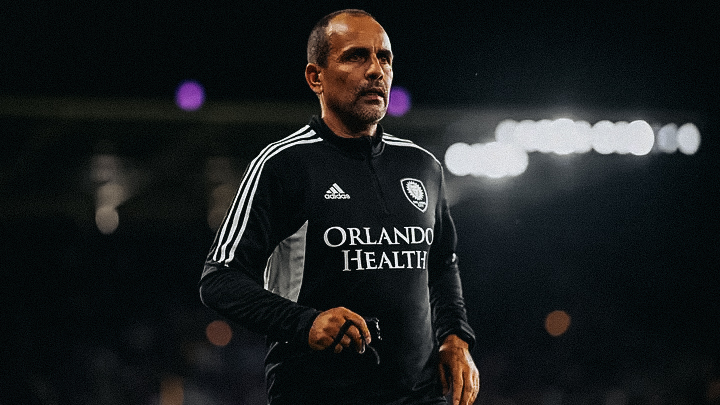
I still remember the first conversation I had with Oscar Pareja as my head coach at Orlando City.
He pulled me aside during preseason, put his arm around my shoulder, and asked me a question I hadn’t really considered myself.
“Why couldn’t Chris Mueller become the best American winger in Major League Soccer?”
I didn’t have a good answer.
Here was a coach who had spent decades developing professional players, telling me he saw something in me that I hadn’t fully seen in myself. That moment changed my confidence. And ultimately, it changed the trajectory of my career. Oscar went on to become one of the most influential people in my life, both on and off the field. So when I started the BTB Podcast, he was someone I knew I wanted to sit down with.
In this episode, we talked about what actually develops great soccer players, why so many talented kids never reach their potential, and some of the changes Oscar is noticing in the next generation of young athletes.
For parents trying to give their children the best opportunities in soccer, this conversation offers a perspective you don’t often hear. And for young players with ambitions of reaching the next level, there’s a lot to take away.
In this conversation, you’ll hear:
- Why Oscar believed I could become one of the best American wingers in MLS—and how one conversation changed my confidence.
- What separates talented young soccer players who succeed from those who never reach their potential.
- Why Oscar is concerned about how quickly today’s young players become frustrated, and what technology might have to do with it.
- Why another two hours of private soccer training might not be what your child needs most.
- Why Oscar believes college soccer remains one of the greatest advantages in American player development.
Watch or listen to the full conversation below.
LISTEN ON SPOTIFY | LISTEN ON APPLE | WATCH ON YOUTUBE
The conversation that changed my confidence
When Oscar arrived at Orlando City, I was eager to prove myself.
I’d already established myself as a professional, but I still had plenty of questions about what I was capable of becoming.
When he told me he believed I could be one of the best American wingers in the league, it wasn’t some generic motivational speech.
He’d seen how I competed in previous seasons and when he spoke with me, I could feel that he genuinely believed I had the ability. That distinction mattered big time because even in our conversation, Oscar explained that building confidence requires honesty. You can’t simply tell every player they’re going to be the best in the world and expect them to believe it.
You have to recognize where they actually are and help them see what’s possible from there.
Sometimes that means showing a player they have more potential than they realize. Other times, it means helping them identify the next small step they need to take.
Looking back though, Oscar didn’t give me confidence by telling me what I wanted to hear. He gave me a reason to believe something I hadn’t yet believed about myself because it was something I hadn’t yet accomplished.
Talent without commitment will only take you so far
I asked Oscar what he looks for when evaluating young players, particularly those who show natural ability but don’t seem willing to do the work. He’s seen plenty of them throughout his career. Players with extraordinary talent who lack commitment. And others who aren’t necessarily the most gifted but have an incredible desire to improve. His point was that talent and commitment have to work together. But what stood out to me was how much responsibility he placed on the player.
As he explained:
“The transformation of the players belongs to themselves.”
A coach can show you what to work on. They can provide feedback, build a plan, and create opportunities. But they can’t want it more than you do. I thought back to the countless times I knocked on Oscar’s office door asking to watch extra film.
Sometimes we’d spend an entire half of a game reviewing my positioning, the spaces I wasn’t recognizing, or the decisions I could have made differently. He was always willing to teach me. But I had to walk through the door and ask.
For young players who feel stuck, that’s worth thinking about. Are you waiting for your coach to tell you everything you need to do? Or are you actively looking for ways to get better?
LISTEN ON SPOTIFY | LISTEN ON APPLE | WATCH ON YOUTUBE
Why Oscar is worried about the next generation of soccer players
One of the most interesting parts of our conversation came when Oscar told me he’d recently been spending time observing younger academy players.
After years of coaching professionals, he wanted to better understand how the next generation was developing. And something concerned him.
He was noticing how quickly some young players became frustrated. Whether that was a teammate misplacing a pass, someone losing possession, or how a player reacts when a coach demands something difficult.
Oscar believes technology and the expectation of instant gratification may be playing a role.
His observation was simple: so much of modern life gives kids what they want almost immediately.
But soccer doesn’t work that way.
You don’t always get the pass you want. Your opponent doesn’t cooperate. The referee makes a call you disagree with. You have to respond, adjust, and find another solution.
And what happens when a player hasn’t developed the patience to work through those moments? They get frustrated instead of solving the problem.
I found this fascinating because it’s not something we typically consider when discussing technical development. We’re constantly asking how to improve a player’s first touch, passing, or decision-making. But how often are we asking whether they’re developing the emotional capacity to handle everything that goes wrong during a game?
Sometimes the best soccer training happens at home
As our conversation continued, Oscar made a point I think every soccer parent should hear.
More training isn’t always the answer. He sees parents investing in private sessions, extra practices, and additional opportunities because they desperately want their children to succeed.
And he understands that desire. But sometimes, he explained, sitting at home reading, talking as a family, or working through a disagreement with a sibling might be more valuable than another two hours on the field.
That stuck with me. Because soccer is ultimately a game of solving problems. And learning how to solve problems doesn’t have to begin with a ball at your feet. It can happen when a child works through something difficult without a parent immediately stepping in, it can happen when they take responsibility for something around the house, or when they learn to sit with frustration long enough to figure something out themselves.
Oscar encouraged parents to give their children the opportunity to experience those difficulties rather than immediately removing them.
This hit especially close to home for me.
After facing the health challenges that ultimately contributed to my retirement, I’ve thought a lot about how the lessons I learned through soccer prepared me for difficult moments outside the game. Throughout my career, I had deliberately challenged myself. I had learned to do things that were uncomfortable and built confidence in my ability to get through them.
And when life presented me with something far bigger than a bad game or a difficult training session, those experiences mattered.
Not every child will become a professional soccer player. But every child will eventually face adversity.
What are we doing to help them prepare for it?
LISTEN ON SPOTIFY | LISTEN ON APPLE | WATCH ON YOUTUBE
Why Oscar still believes in the college soccer pathway
Another topic I was excited to discuss was college soccer.
There’s so much conversation today about the professional academy system and whether talented young players need to enter that environment as early as possible. Oscar sees it differently.
Having developed players through professional academies, the college draft, and international pathways, he believes the American college system is something we should value much more. He explained how players who arrive at the professional level at 21, 22, or even 23 often bring a different level of maturity. They’ve learned to manage their schedules, handle responsibilities, pursue an education, and become more independent.
He also noted how effectively many college-developed players absorb tactical information. I could relate to that personally. If I’d entered a professional locker room at 17, I don’t think I would have been ready.
College gave me time to mature, experience adversity, and develop habits that eventually helped me succeed professionally. Oscar wasn’t arguing that college is better than the academy system. His point was that both pathways develop different strengths. And in American soccer, having multiple routes to the professional game should be viewed as an advantage.
For a young player worried they’re falling behind because they haven’t signed professionally at 16 or 17, that’s an important perspective to hear.
The relationships matter more than the trophies
Toward the end of our conversation, I asked Oscar what he felt had been the key to his success as a coach. This is someone who has won trophies, developed national team players, and built successful teams throughout his career. But he didn’t start by talking about tactics, formations, or results. He talked about relationships.
He remembered the players he’d coached as children who now have families of their own. The relationships that continued long after they stopped working together. He described those relationships as his treasures and trophies. I understood exactly what he meant.
There were difficult moments during our time together. Especially toward the end of my career in Orlando, when I was dealing with decisions about my future. We didn’t always agree, but still, I always knew Oscar cared about me. He was willing to challenge me, listen to me, and invest time in helping me grow. And because of that, he was the kind of coach I wanted to give everything for.
I think that’s what separates truly great coaches. They understand they’re working with people, not just players. And sometimes their greatest impact has nothing to do with the result on Saturday.
What I’ll take away from this conversation
When I think about my time with Oscar, I naturally remember the games, the training sessions, and the opportunities he helped me earn. But what I appreciate most now are the lessons that followed me beyond soccer. The confidence to believe I was capable of more. The curiosity to keep asking questions. And the understanding that no matter how good a coach or mentor might be, the responsibility for my development ultimately belongs to me.
Oscar said something at the end of our conversation that meant a lot. He had a coach who made that kind of impact on him. He passed those lessons on to players like me. And now, through BTB, I have an opportunity to pass them on to someone else. That’s what I hope these conversations can do.
LISTEN ON SPOTIFY | LISTEN ON APPLE | WATCH ON YOUTUBE
Watch or listen to the full episode above. And if you’re a parent, player, or coach who could benefit from Oscar’s perspective, share it with them.
For more lessons from inside the game, subscribe to The Underdog’s Edge, BTB’s weekly newsletter for players and parents.
For help applying these lessons to your own development, explore the BTB Locker Room.



Comments +
Comments